
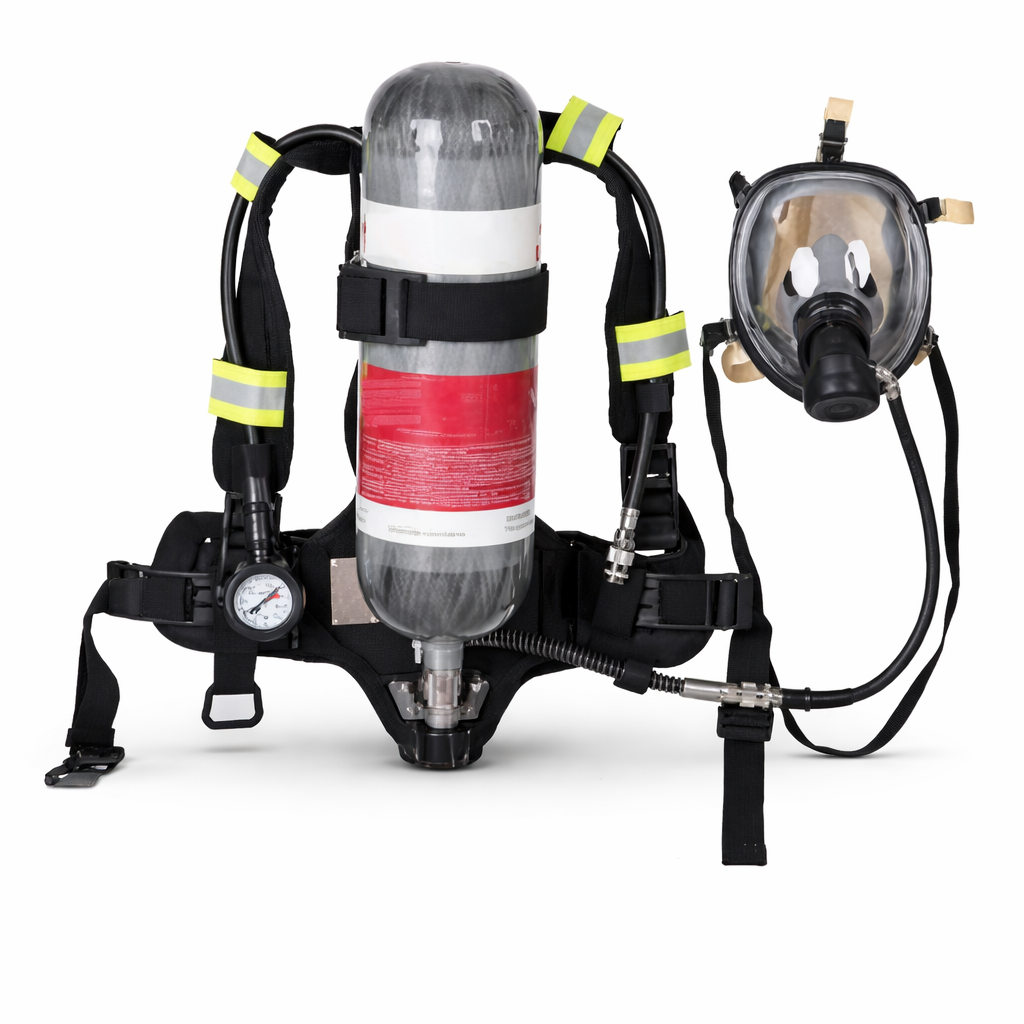
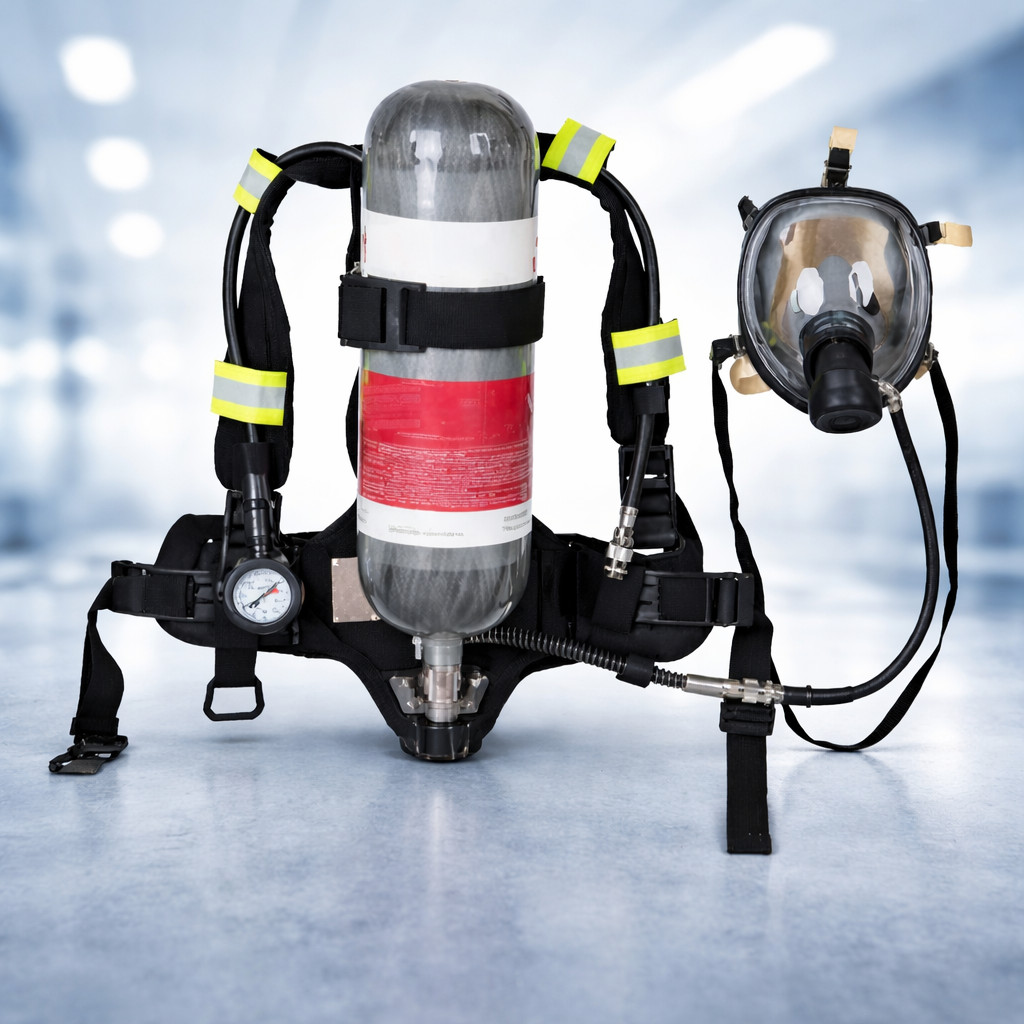
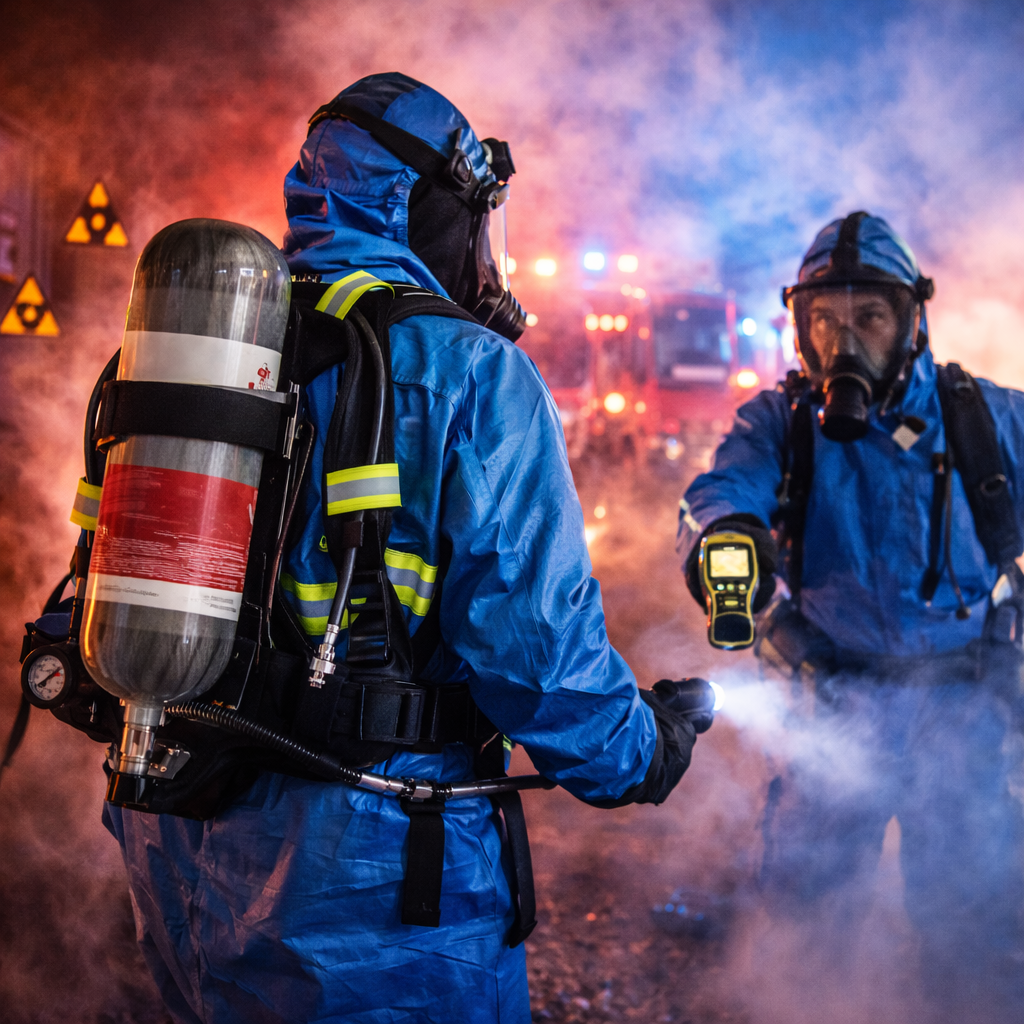
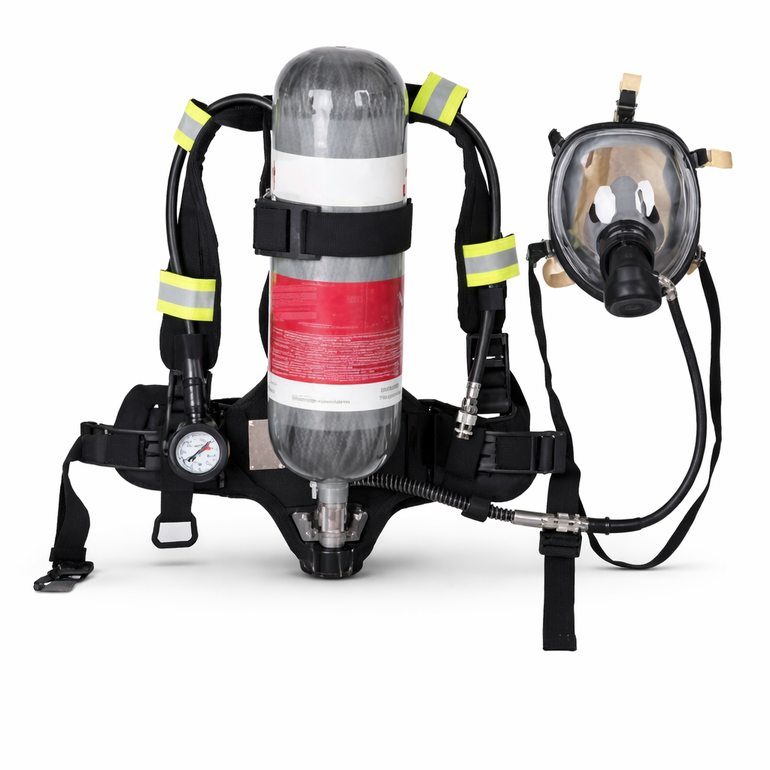
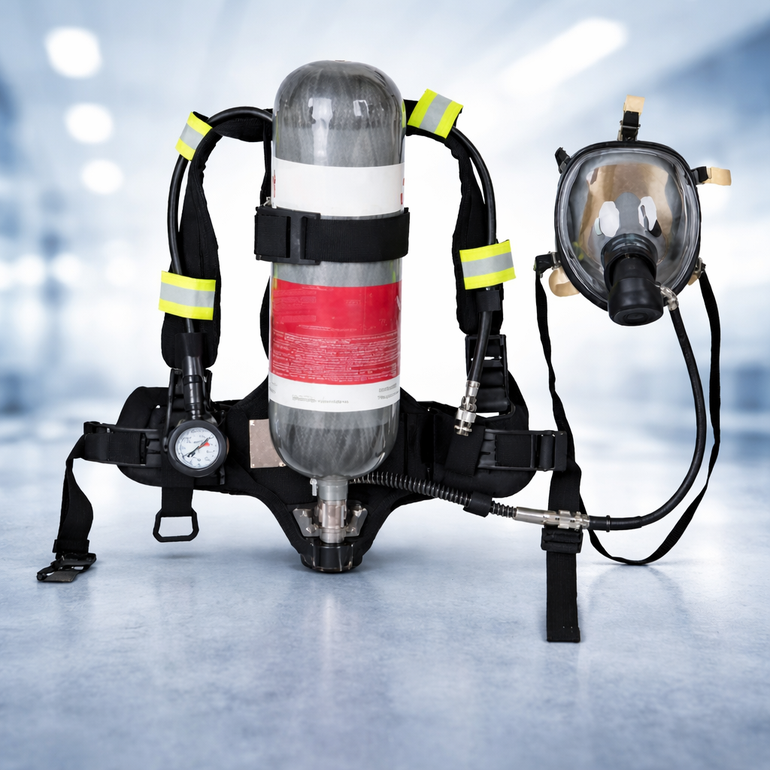
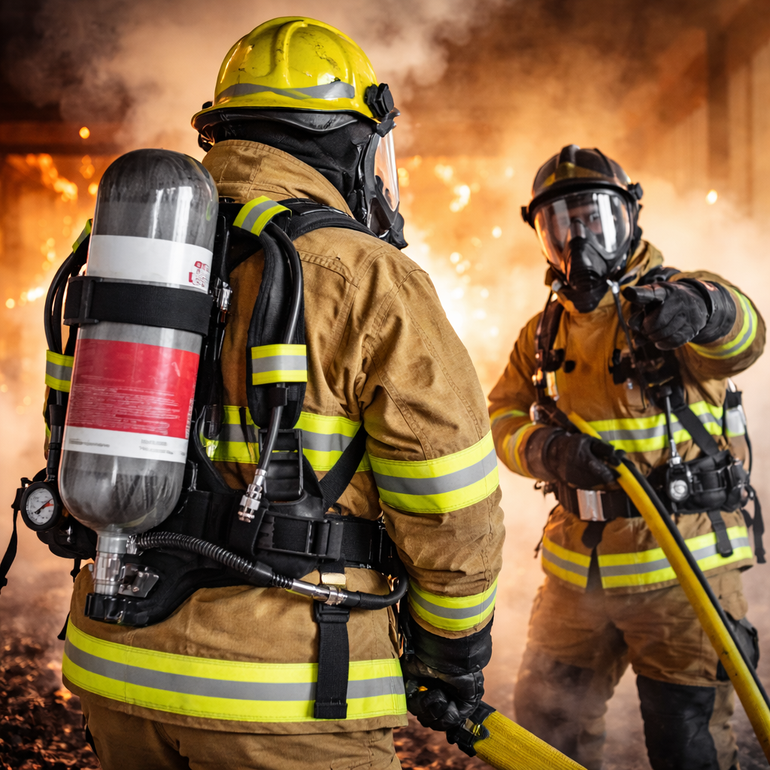
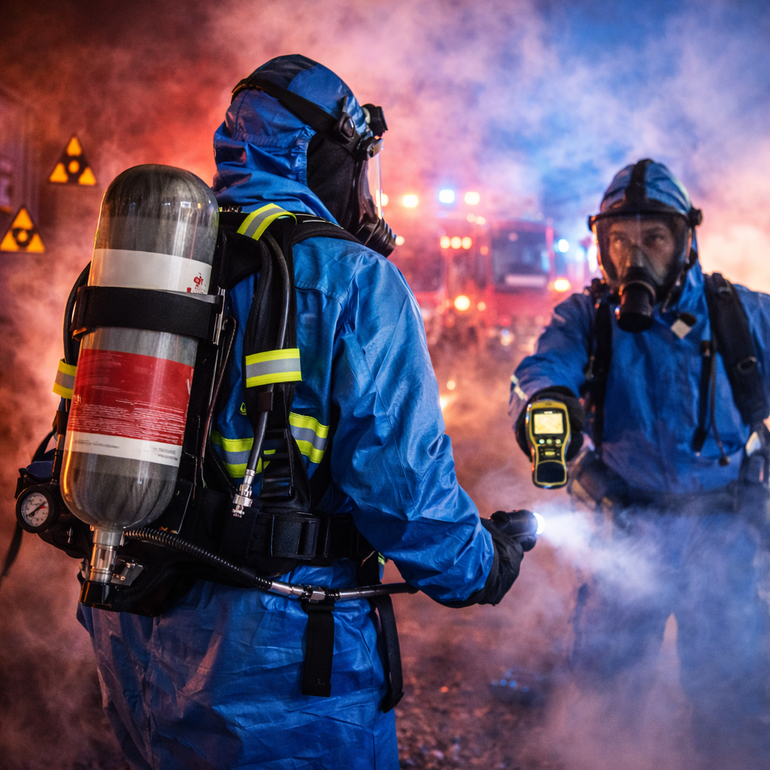

A professional self-contained breathing system by Masters, engineered for personnel protection in hazardous environments and firefighting. Featuring a lightweight carbon fiber cylinder and an ergonomic design.
more information
+
Earn loyalty points with this purchase
RewardsThe Masters Self-Contained Breathing Apparatus (SCBA) is the ideal choice for rescue teams, mining operations, chemical plants, and firefighting units. This system is built for maximum safety, utilizing a durable composite carbon fiber cylinder that withstands pressures up to 300 bar. The full-face mask provides an expansive field of vision with anti-fog technology. Equipped with a heat-resistant Aramid backpack and an advanced acoustic alarm system that triggers during low pressure, it ensures the user's safety by providing a clear signal to evacuate the hazardous zone in a timely manner.
Lightweight & Durable: Cylinder made of composite carbon fiber to reduce the physical load on the user.
Comprehensive Visibility: Full-face mask with an anti-fog lens offering a visual field of up to 92%.
Acoustic Alarm System: Integrated alarm with a sound level of ≥ 90dB that activates when pressure reaches critical levels.
Ergonomic & Secure Design: Aramid backpack and Kevlar headnet ensure stability and comfort in extreme conditions.
Long Service Life: The cylinder is designed for a 15-year service life, providing 60 minutes of air per use.
Description: Self-Contained Breathing Apparatus (SCBA).
Cylinder Material: Composite carbon fiber.
Cylinder Volume: 6.8L.
Rated Service Time: 60 mins.
Cylinder Pressure: 300 bar.
Alarm Pressure: (55±5) bar.
Max Air Flow: ≥ 1000L/min.
Mask Materials: Silicone mask body with Kevlar headnet and Aramid backpack.
Approvals: EN137:2006 / EN136:1998.
Origin: China.
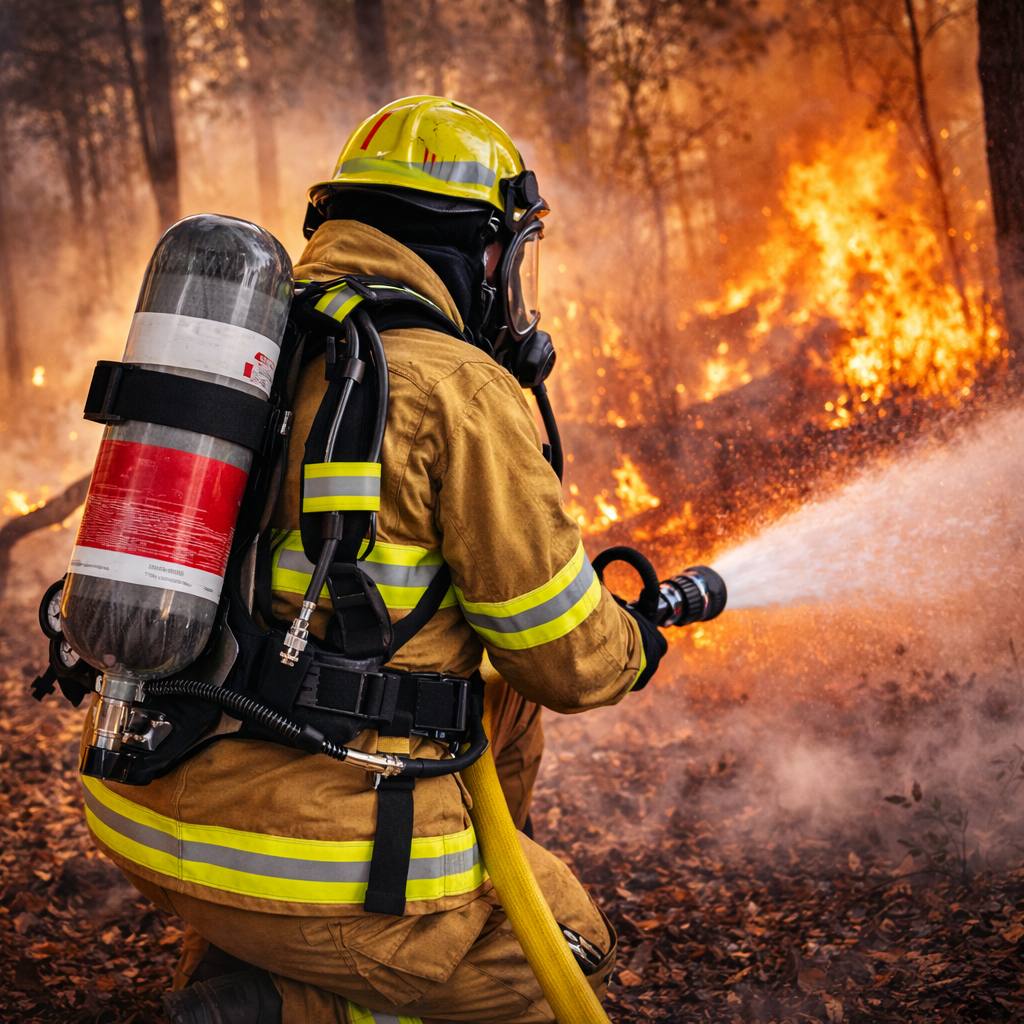
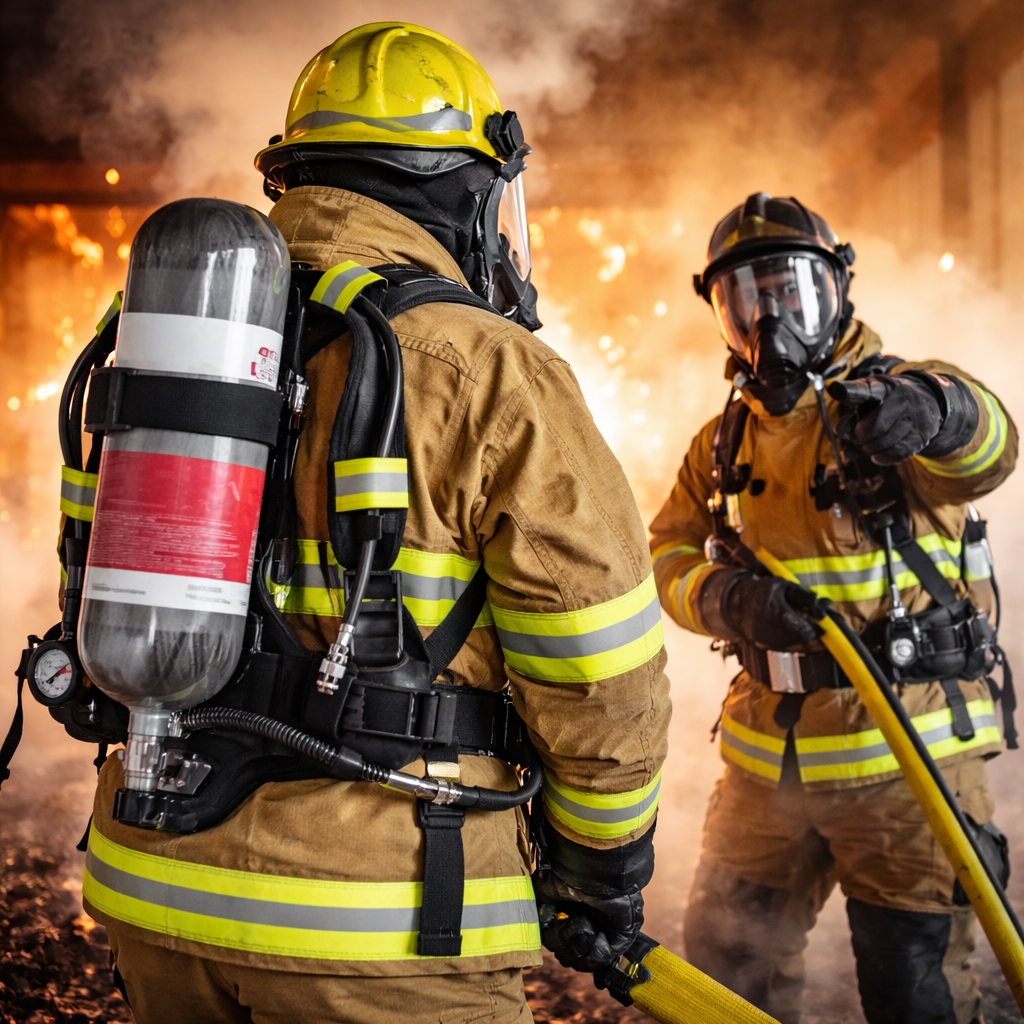
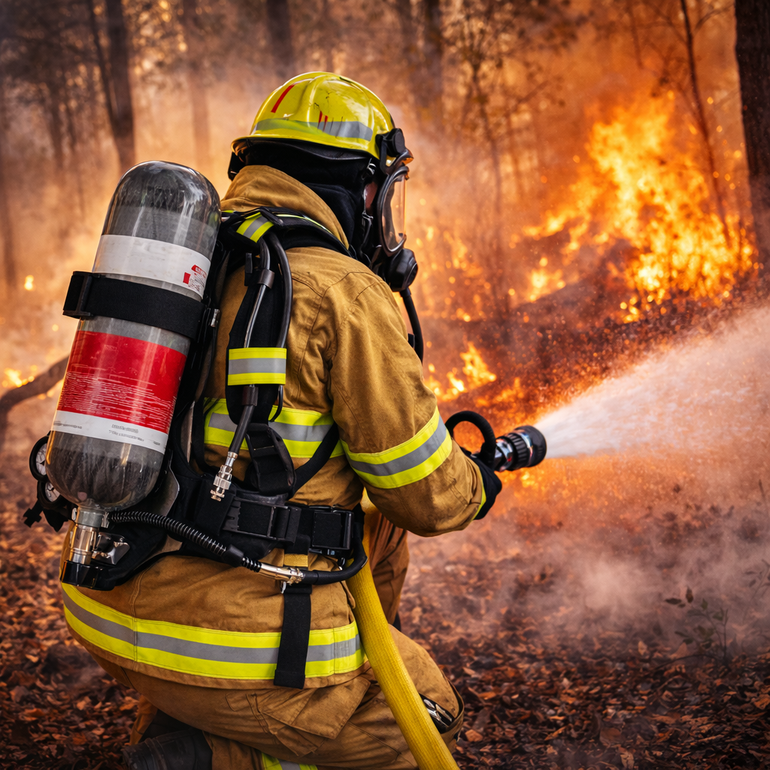
Firefighting and rescue operations within buildings and facilities.
Working in confined spaces and mines with low oxygen levels.
Handling chemical leaks and toxic gases in industrial plants.
Maintenance work in storage tanks and contaminated environments.
